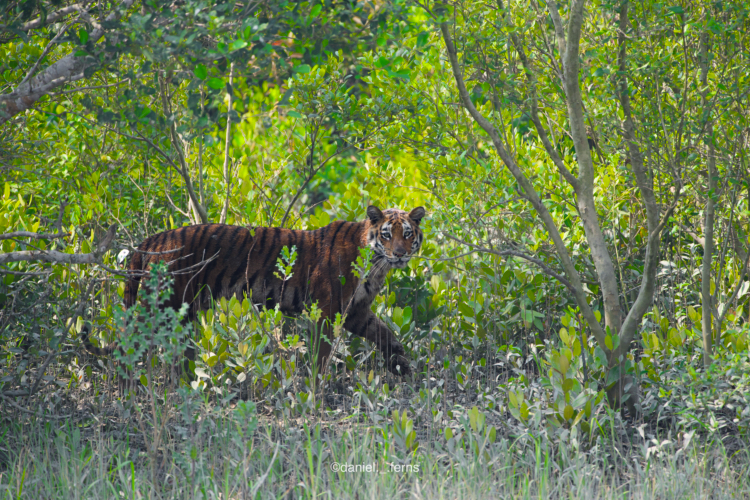
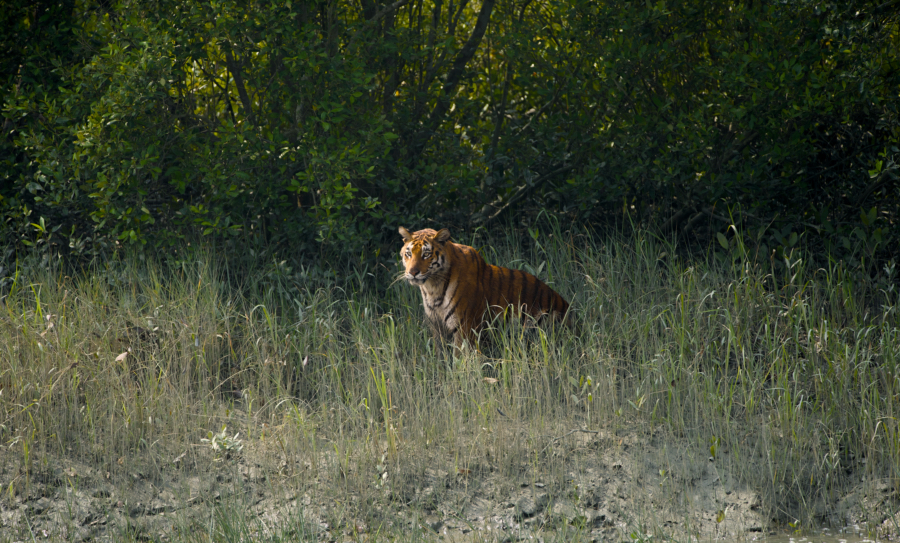
The Sundarbans is the land of adaptations. Every living thing here negotiates survival. The tides dictate life. The mud shifts beneath you. Nothing is easy here, for anyone.The same tiger that hunts gaur and chital in Central India survives here on fish and crabs. Prey is scarce. Territory is fragmented by water. The landscape is hostile.
Tigers are shy everywhere, but here they are different. They swim long river channels. They vanish into mangrove shadows. They move with an awareness that feels ancient.
In dry deciduous forests like Ranthambhore, seeing a tiger is often about patience and tracking. In the Sunderbans, it is about humility. The terrain is too complex. The creeks too many. The forest too dense. The behaviour too unpredictable.
Which is why when you see a tiger here, something shifts.Very often, the naturalist and the guide are happier than the tourists. Because we understand what it truly means. The rarity. The odds. The depth of the moment.
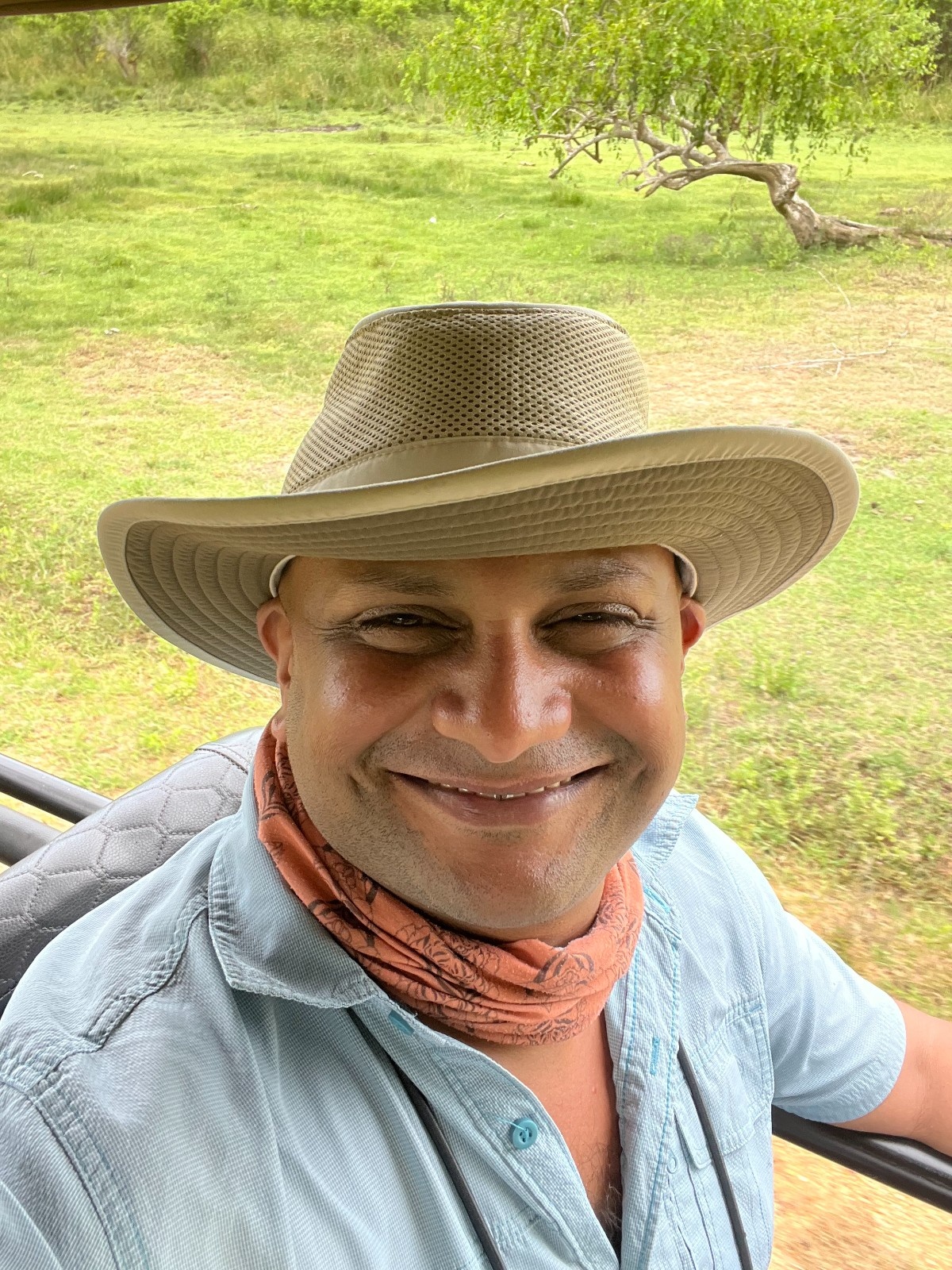
I have been visiting the Sundarbans almost every year since 2007. Over time, I have been fortunate. I’ve seen lesser cats. Irrawaddy dolphins. A king cobra. A few tigers.But the sighting ratio here is brutally low compared to other parks.
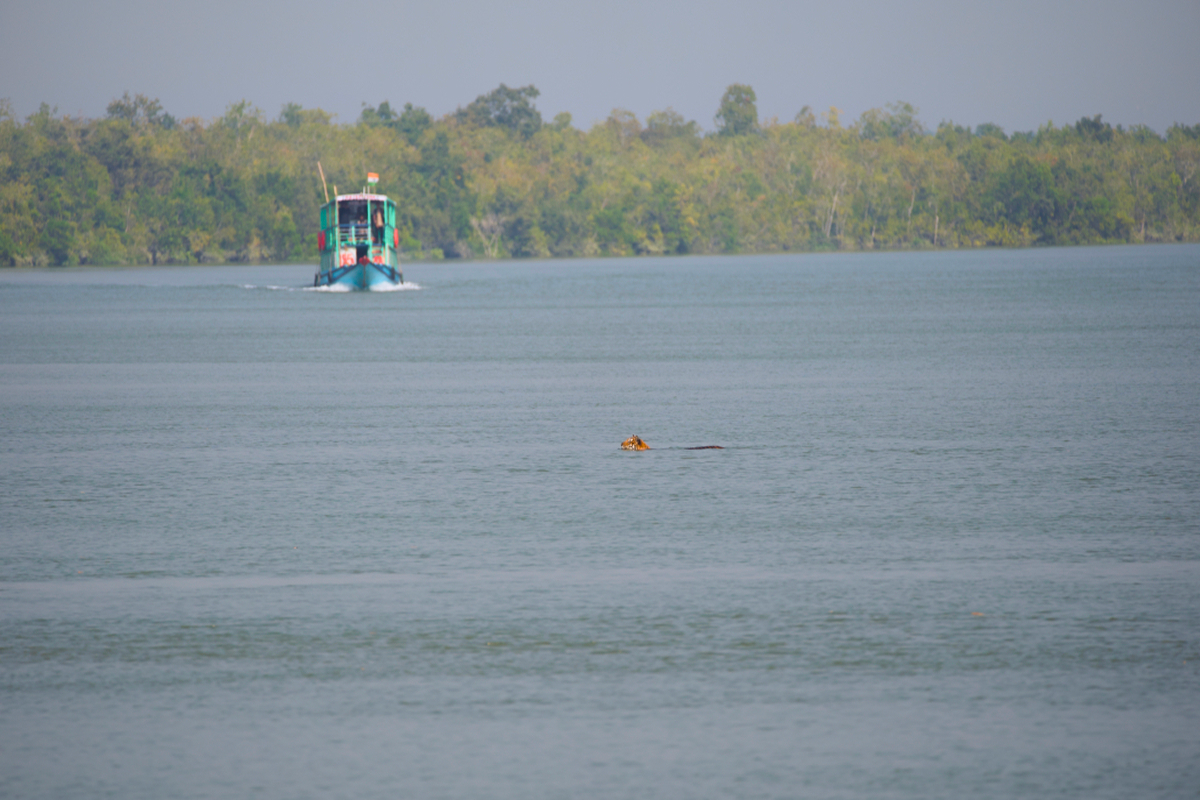
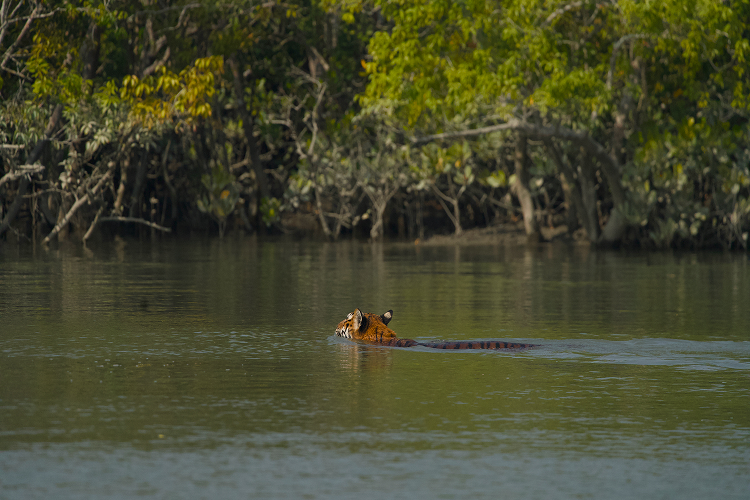
For the first few years, it was mostly tracks and signs. Pugmarks on mudflats. The hint of presence. Then occasional glimpses. A quick crossing over an empty riverbed. A fleeting form dissolving into mangroves. Never the quintessential image of a tiger swimming across a wide channel.
In places like the Sundarbans, the formula is simple. You play with numbers. The more hours you spend. The more seasons you return. The more you surrender to the rhythm of the tides. Eventually, the forest gives you something.
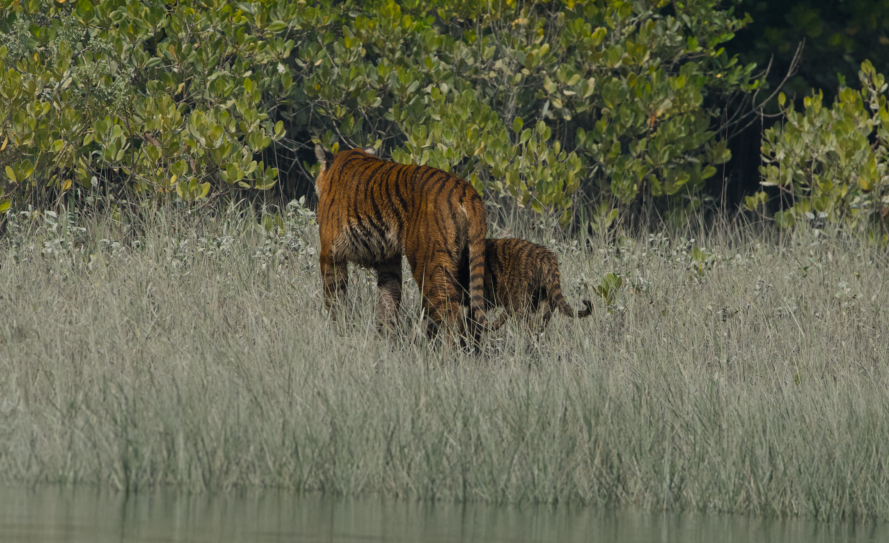
Never in my wildest imagination did I think I would see 3 – to 4 – month-old cubs with their mother here. Undisturbed. No other boat around. Just us and them. I had to physically pinch myself.
Some of the guests on my boat were visiting the Sunderbans for the first time. One of them was on their first safari ever. I often wonder what kind of luck they were carrying. It was the first 20 minutes of Day 1.
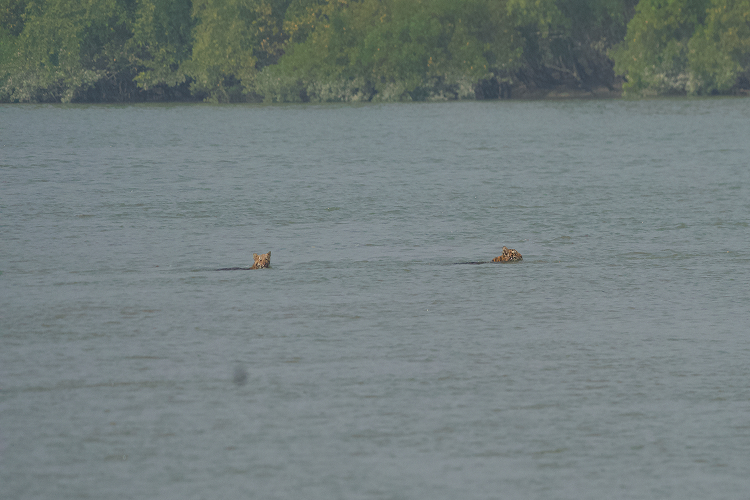
Not only did we witness intimate behaviour between the mother and her cub, something extraordinarily rare in this landscape, but then she did the unthinkable. She nudged them toward the water.
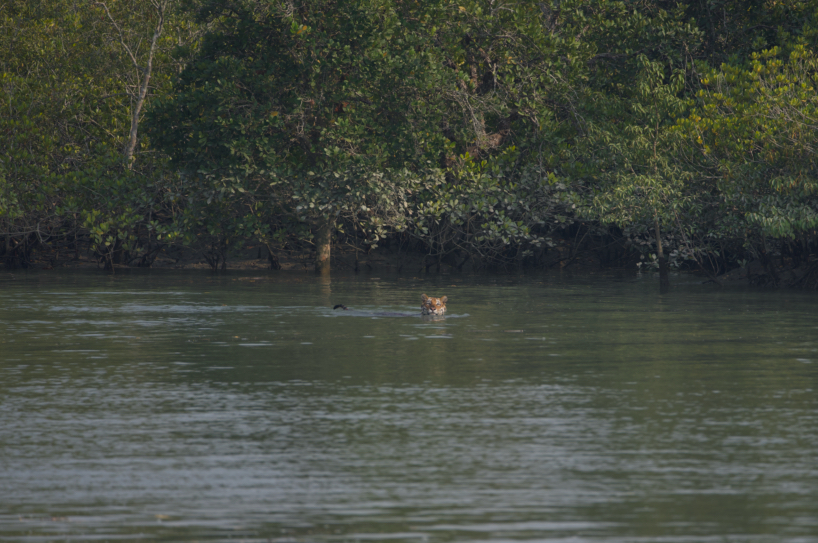
And one by one, the entire family swam across the river channel.
My dream had come true, but with layers I had never dared to ask for. Icing. Cherry. Chocolate sauce. Ice cream. All of it.
Ashok, my guide with 23 years of experience in these waters, and the entire boat crew gave each other a group hug. For Ashok, this was the greatest sighting of his career in the Sunderbans.
Think about that.
Moments like these are why we do what we do as naturalists. Not for guaranteed sightings. Not for checklists.
For the unknown.
Because in the end, all you can do is clock more hours in the forest. Return again and again. And hope that, someday, you are simply in the right place at the right time.
And when it happens, the forest reminds you that you were never in control to begin with.