Wildlife sightings and safaris have changed dramatically over the last decade. I hear it often from guides and drivers, usually said half in frustration and half in disbelief: “Yaar, abhi tiger road par nahi chalta hai.” (The tiger doesn’t walk on the road anymore). Sightings are shorter now, they say. It’s just a quick crossing – stripes slipping through lantana before vanishing into the bushes.
I’ve listened to these comments many times and rarely responded. Instead, I’ve observed.
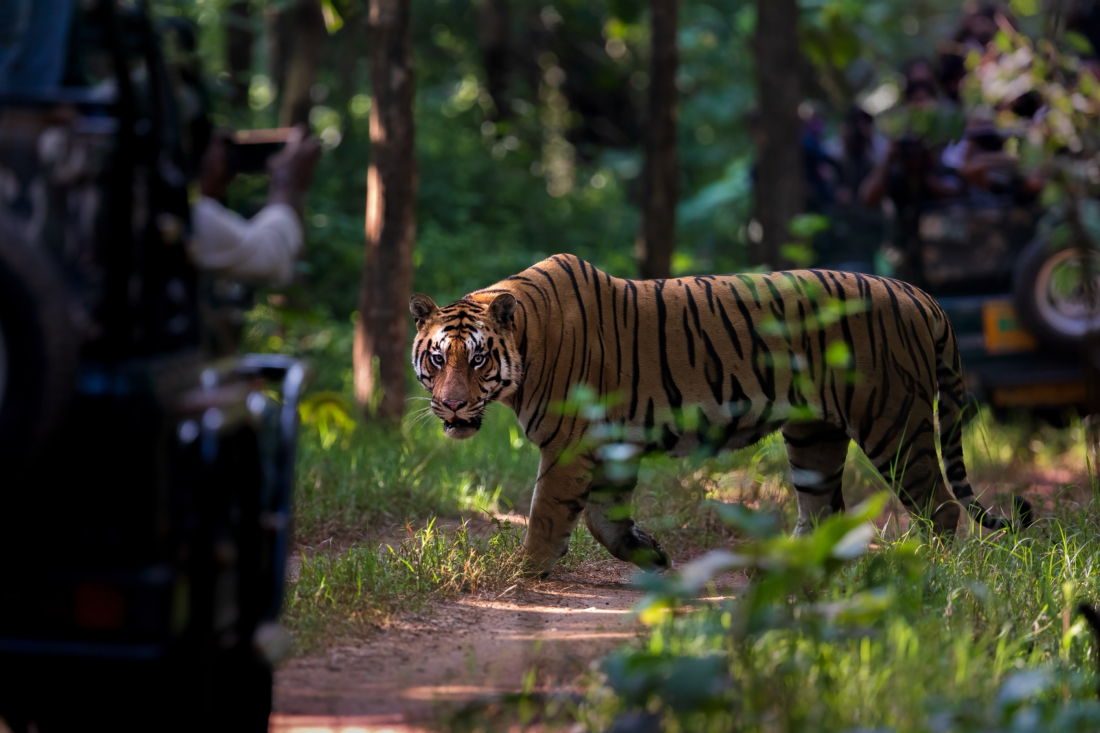
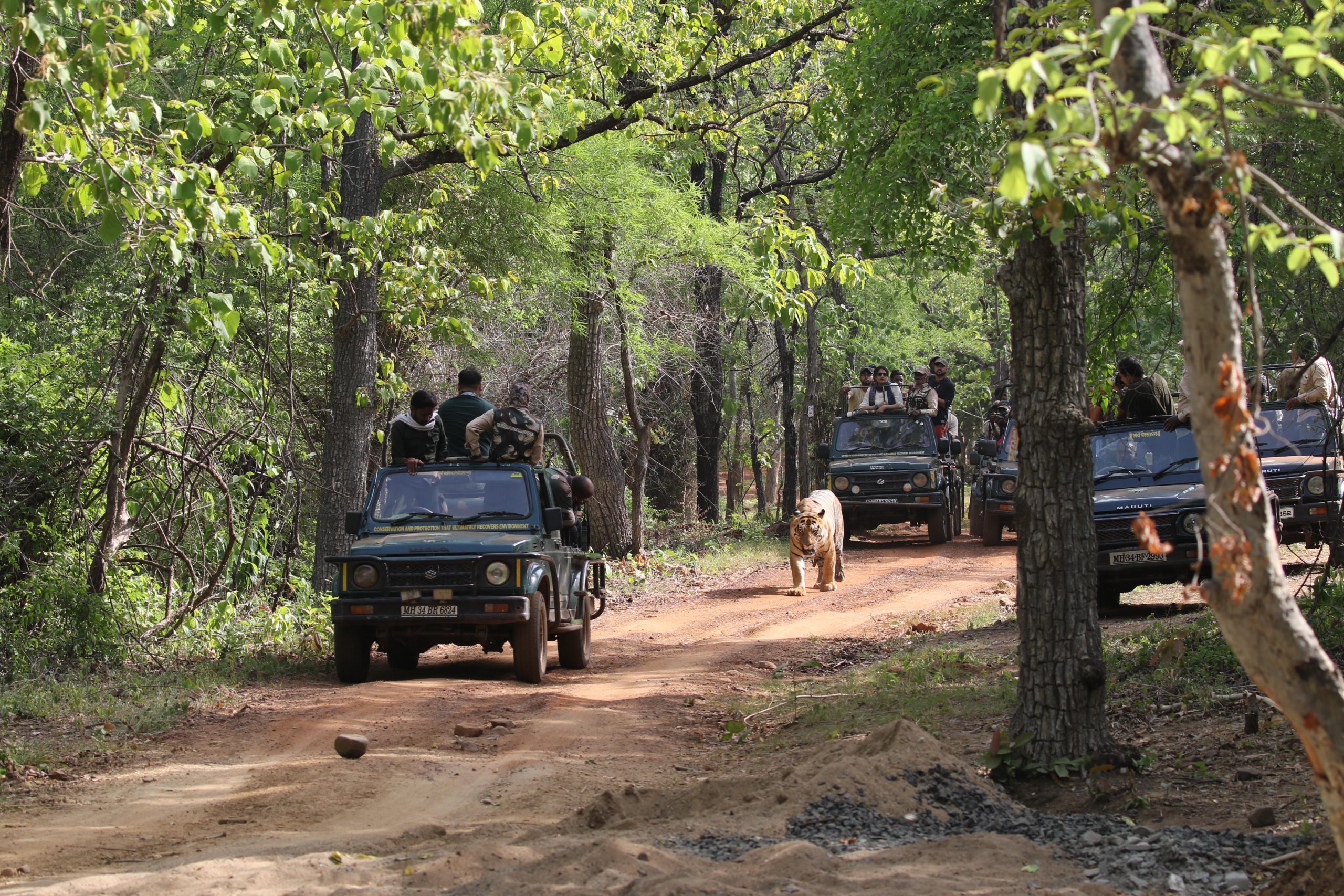
I’ve watched jeeps full of guests urging drivers to get closer. I’ve seen drivers and guides shouting at one another to move ahead, to block a turn, to edge forward for a better angle. Of course, the tiger disappears into the jhaadi. We’re not giving it any space. We’re treating them like pets! And then we complain that sightings aren’t what they used to be.
The question that surfaces again and again is this: when do you walk away?
I’ve been part of a few sightings that felt extremely questionable, moments that left me uncomfortable long after the adrenaline wore off. Each time, the same internal debate unfolds. Do you close your eyes and tell yourself it’s acceptable because it’s happening everywhere anyway? Or do you take a stand and risk missing something that may or may not be extraordinary?
If I’m honest, I’m not entirely sure where I stand. Ten years on, I’m still as keen (read: desperate!) to see a tiger as I was on day 1. The thrill hasn’t faded. The anticipation when you hear a sambhar call or see fresh pugmarks in the dust is still electric. That longing can blur the lines. The ethical boundary is rarely obvious when your heart is pounding.
It’s easy to blame the drivers and guides. But the deeper fault often lies with us, the tourists. We’re the ones offering large tips and quiet bribes for rule-breaking behaviour. We push for off-road drives, for closer angles, for longer stops and rarely consider the consequences that they face – suspensions, fines, loss of permits. We get our sighting, our photographs, our stories of the “ballsy” guide who delivered. Then we return home while the ecosystem, and often the driver’s livelihood, absorbs the cost.
Wildlife tourism in India, especially domestic tourism, has surged dramatically since the pandemic. It feels like the perfect escape. Open landscapes, fresh air and a sense of freedom. On the surface, there are no obvious drawbacks. But as tourism numbers increase, so too must our sense of responsibility. Instead, the opposite seems to be happening.
Instagram has altered the landscape of wildlife experiences in ways we barely acknowledge. The safari is no longer just about observation; it’s about performance. Reels, selfies, instant uploads. Even the most advanced phone camera cannot properly capture a tiger at a respectful distance. The zoom falls short. The image blurs. And so guests urge drivers closer. And closer. And closer.
It is dangerous and deeply unsettling. Not all tigers are comfortable with vehicles lining a road. They are wild animals with territories and instincts, with cubs to protect and space to defend. To treat them as predictable performers is to misunderstand them entirely.
The first time I truly felt this was in Ranthambore National Park in 2016 on a full-day safari. Only three jeeps were waiting near a nallah where a tigress named Noor was resting with her two cubs. After about forty-five minutes, our guide grew impatient. He suggested we drive in to “check” on her. We went off track, through trees and down a rocky bank into the nallah.
I had only been going on safari for a year or two then, but I remember feeling both horrified and terrified. A tigress with cubs is protective for good reason. Anything could have happened! A charge would have been entirely justified. The others seemed unbothered, so I stayed quiet, but I knew this was wrong. What we were doing wasn’t safe. And it wasn’t respectful.
The real dilemma isn’t about wildlife at all; it is about character. Sensitive tourism demands restraint, especially when excitement is at its peak. It asks whether you can accept a fleeting glimpse instead of forcing a prolonged spectacle. Whether you can choose distance over drama. Whether you can value the animal’s comfort over your own story.
Walking away from a once-in-a-lifetime sighting may mean missing the photograph you imagined. It may mean returning home without the viral reel or the perfect portrait. But staying and pushing the boundaries may cost something far greater, something we have seen in a few parks already. A shift in animal behaviour, heightened stress, altered movement patterns, and an erosion of trust between humans and the wild, with the animal paying the consequences. Never us.
We’ve all encountered situations where ethical lines were crossed. The truth is, the forest notices patterns. Animals learn. Tigers that once walked roads comfortably may now retreat sooner, more wary, more stressed. And then we lament that sightings aren’t what they used to be.
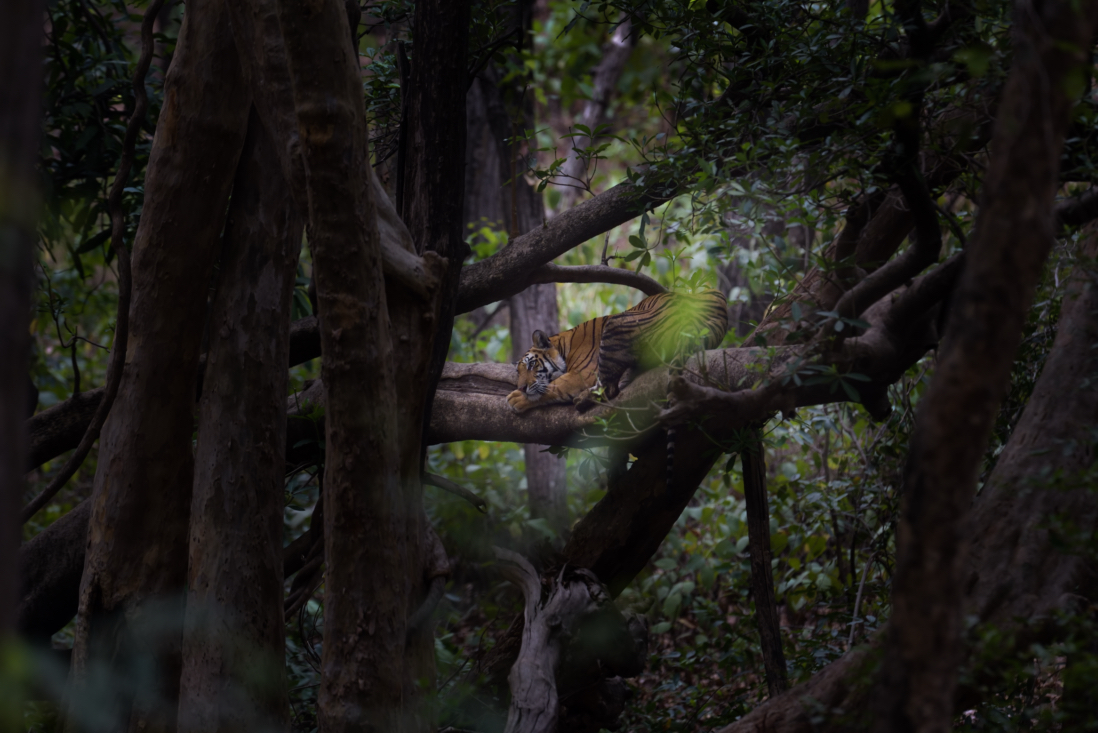
At Happy Hathi, we choose to work only with people we have known, trained with, and grown alongside, those who share our values. It makes all the difference. You may not get a tiger strolling down a road with thirty jeeps jockeying for position. You may miss the chaotic spectacle. But you might experience something rarer: a quiet, undisturbed encounter. A sloth bear emerging at dusk. A pack of wild dogs weaving through golden grass. Or a tiger, relaxed and unhurried, because it has been given space.
When you respect the forces at play around you, the wilderness responds differently.
So when do you walk away? Perhaps there isn’t a neat answer. Perhaps it is a question you must ask yourself each time your pulse quickens and the engine revs forward. Is this safe? Is this legal? Is this respectful? Would I be comfortable if this were happening in my own home?
The depth of your character reveals itself not when the tiger appears, but in how you respond when it does. Sometimes the most powerful wildlife experience isn’t the one you chase or capture. It is the one you allow to unfold naturally, or the one you are brave enough to let go.