I have travelled to a lot of places. I have sat with lions at dawn, watched glaciers calve into cold oceans, and navigated bazaars in cities where I did not speak a word of the language. I thought I had a reasonable sense of what “different” looked like.
Then I went to the Omo Valley, and I realised I had no idea.
A World That Exists on Its Own Terms
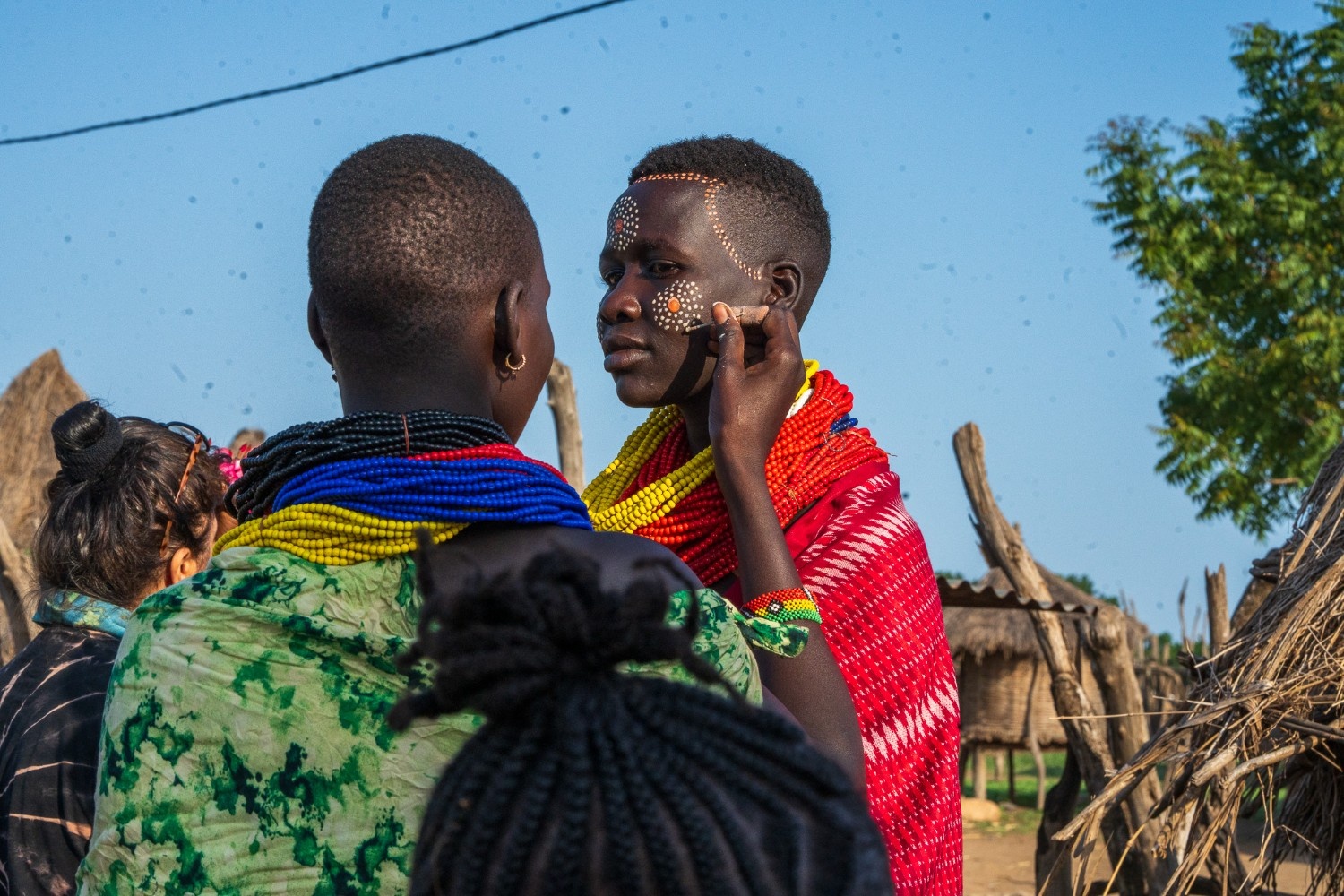
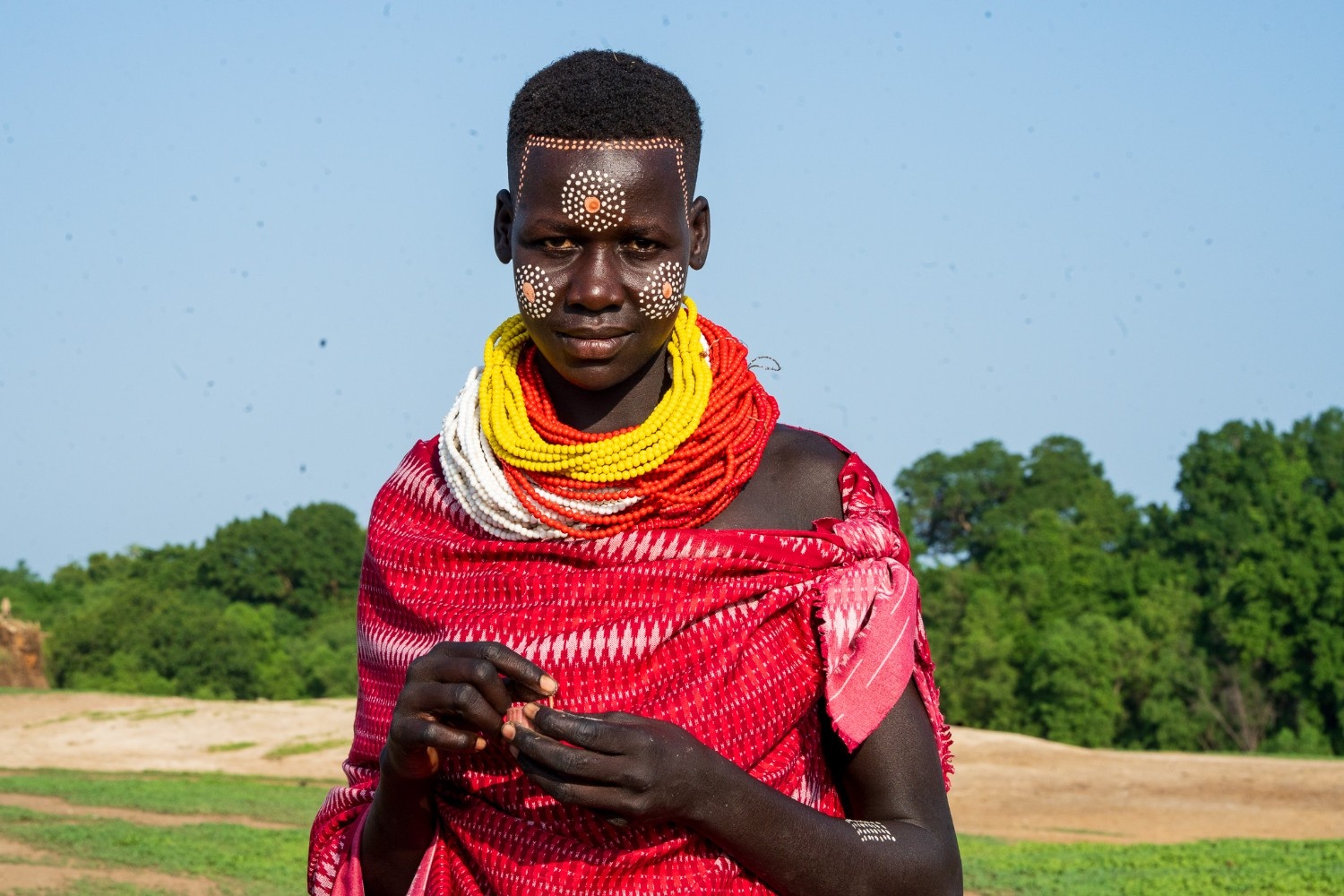
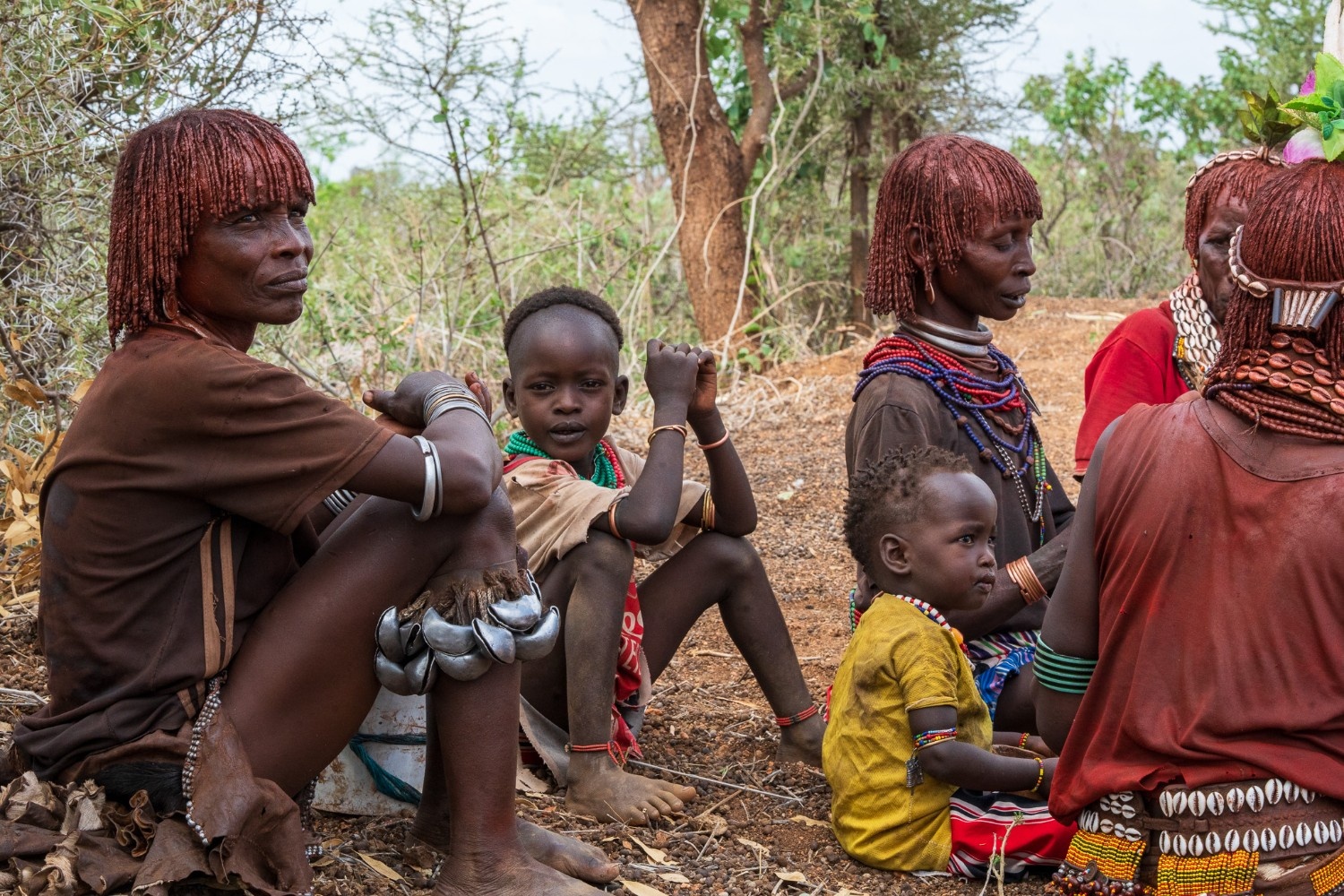
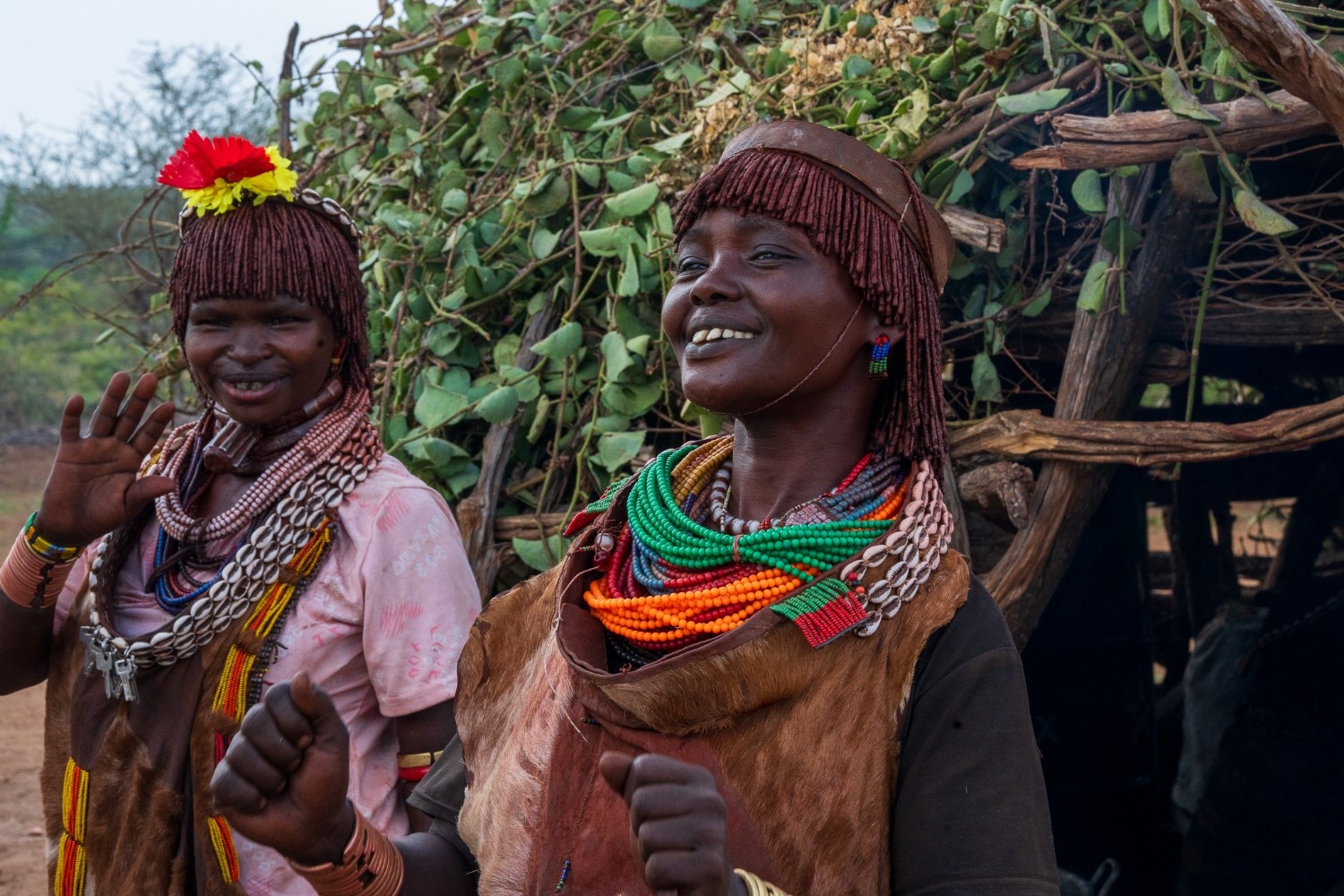
The Omo Valley in southern Ethiopia sits so far outside the familiar rhythms of modern life that arriving there feels less like travel and more like time displacement. The Hamar, Mursi and Karo communities are not simply relics of another time. They are people with their own histories, systems and rhythms, many of which still sit far outside the way most of us understand modern life.
The Mursi women wear large clay discs in their lower lips, a practice so striking that most visitors struggle to look past it. But spend a few hours here, eating with people, sharing coffee, trying and failing to communicate across three languages, and the disc becomes just one detail in a much larger, more intricate picture. What I keep coming back to is not the visual drama. It is how ordered and purposeful everything was.
Every person in these communities seemed to carry a role and responsibility in an architecture that has been refined over centuries. There is a logic here that we, with our calendars and notifications and five-year plans, have perhaps lost touch with.
The Ceremony Nobody Tells You About
I was there to witness a Hamar bull-jumping ceremony. I knew the broad outline, a rite of passage for young men, bulls involved. What I did not know was what happens before the jump itself, and how much of it would stay with me.
The ceremony can unfold over several days, with preparation, gathering, feasting, coffee, home-brewed sorghum beer, dancing, family obligations and the whole community gathering around one young man’s transition into adulthood.
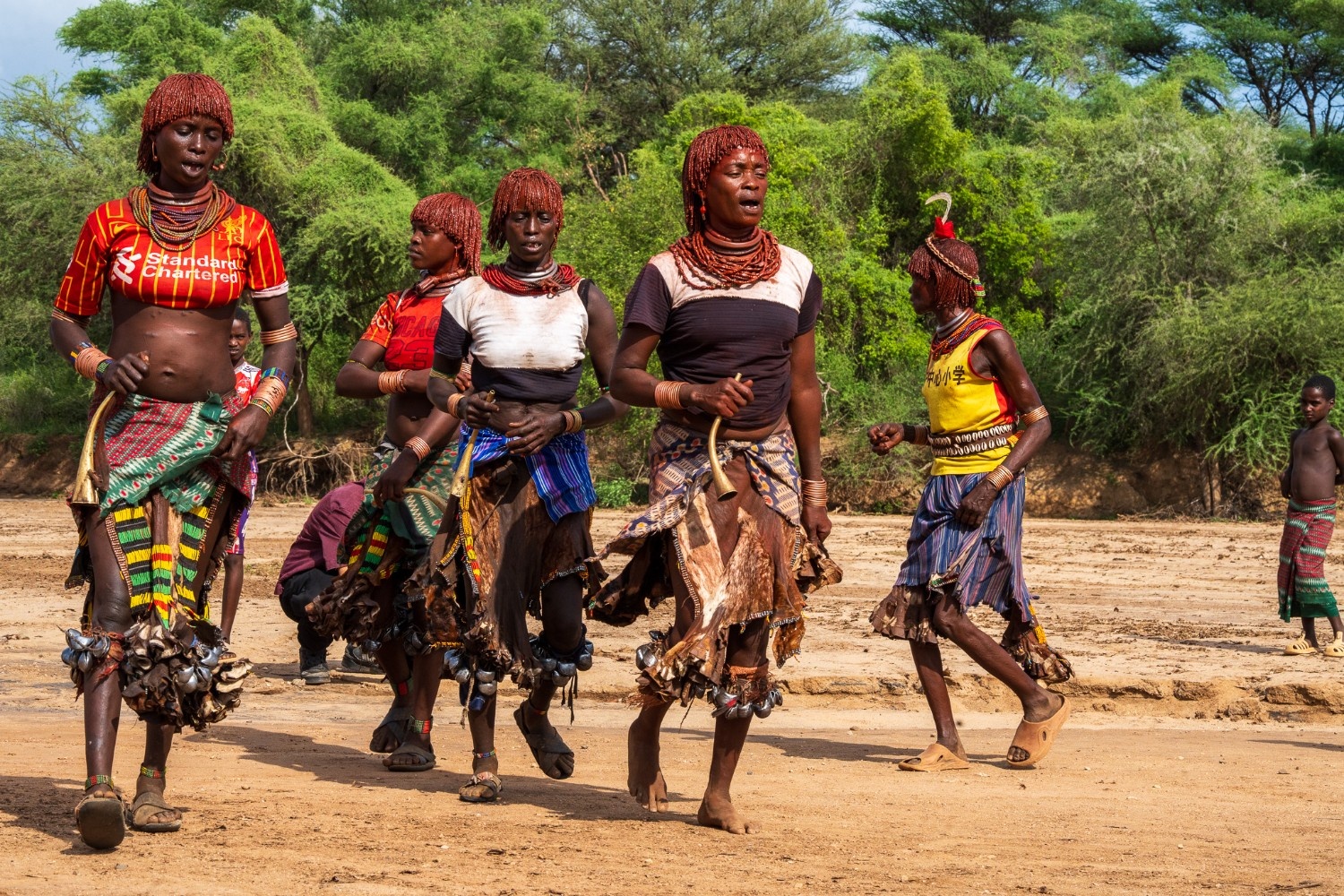
Before the young man runs the bulls, the Maza, unmarried men who have already completed the rite, arrive in the village. And then something happens that I did not expect. The boy’s female relatives, his sisters, cousins, all the women closely tied to him, approach the Maza and demand to be whipped as part of the ritual.
Not symbolically. Actually whipped.
As it was explained to me, the scars are carried as signs of loyalty, love and obligation. They become proof, in the most visceral possible sense, that this boy was cherished, that his transition mattered, that his family stood behind him.
I stood there trying to process this through every framework I had. I couldn’t. And perhaps that is the point. What I saw did not fit neatly into my idea of suffering, performance or devotion. Within that setting, it seemed to carry a meaning far more complex than pain alone, a language of loyalty, pride, kinship and obligation that I could not fully translate.
The Boys Who Are Given Time
What happens after the ceremony is, in its own way, just as extraordinary.
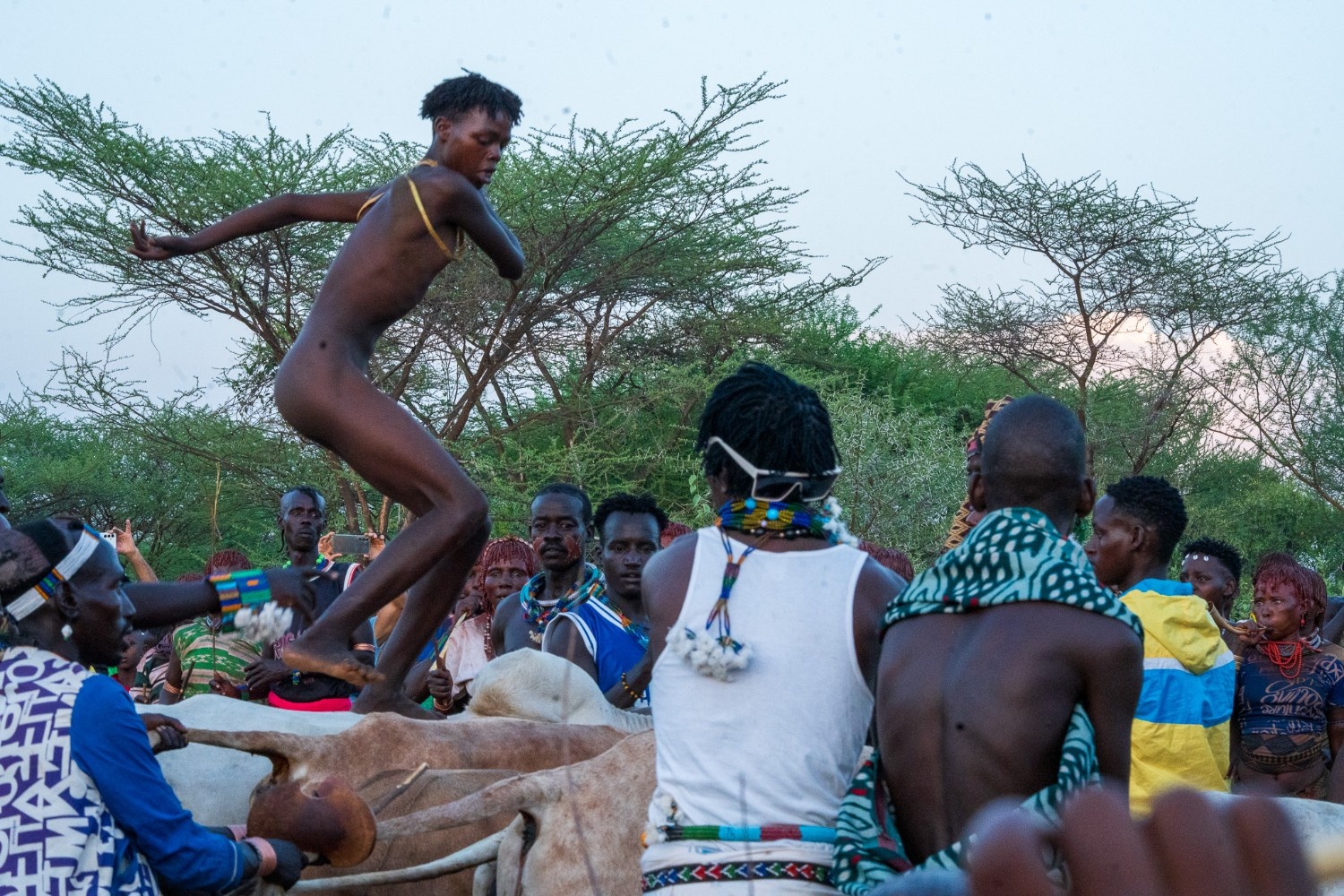
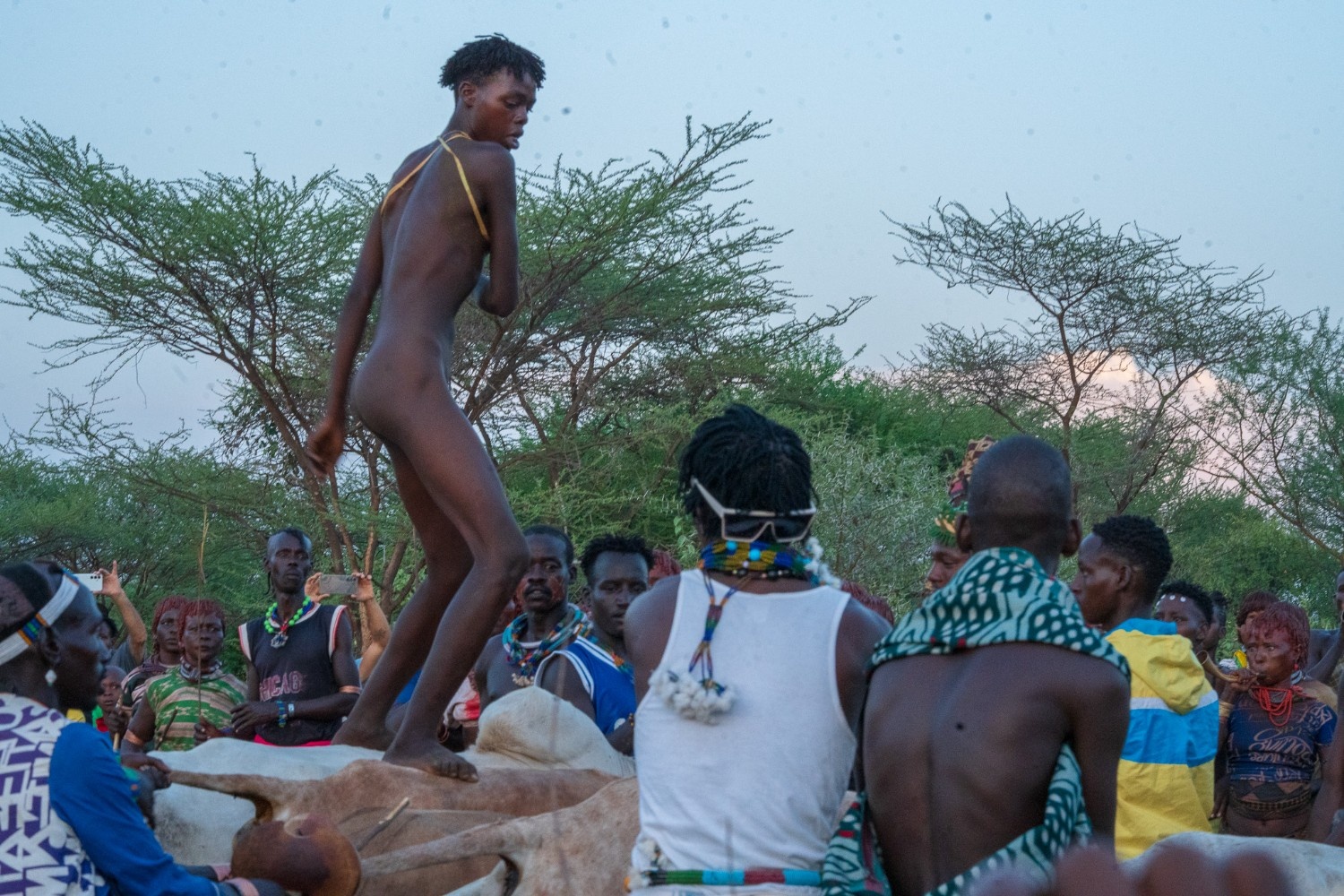
Once a young man completes the bull jump, running naked across the backs of the bulls in front of the entire village without falling, he enters a liminal phase, no longer a boy, not yet fully settled into the responsibilities of marriage and household life.
As it was explained to me, after the ceremony, the young men may spend a period moving between villages, supported by the wider community, meeting people, forming relationships and gradually moving towards marriage. There is something quietly radical in that idea. The community seemed to understand that this was a time between worlds, and that it needed to be held, fed and allowed to unfold.
What are they doing? Looking for a wife. Getting to know the world. Figuring out who they are before they are asked to be something to someone else.
I thought about this for a long time afterwards, sitting in the back of our vehicle watching the landscape scroll past. We talk endlessly in the modern world about the importance of finding yourself, taking a gap year, not rushing into adulthood. These are things people say at dinner parties and write books about. Here, from what I understood, it is woven into the structure of society, supported not by an individual plan but by the wider community.
When a young man finds a woman he wants to marry, his family approaches the girl’s family. They negotiate and life proceeds. The years of wandering end, and the weight of adulthood begins.
But first, he gets to be free.
What I Brought Home
There is something about being around people who are so completely at home in their own world that it throws your own restlessness into sharp relief. I am a person who builds businesses, who creates itineraries, who is always, in some corner of my mind, planning the next thing. Sitting with the Hamar, I felt the strange luxury of people who are exactly where they are supposed to be. It was the most acute I felt it on the entire trip.
The bull jump itself, when it came, was breathtaking. The young man ran. He did not fall. The village erupted. And somewhere in that noise was everything: pride and love and fear and relief and the particular joy of a community that still knows how to celebrate in a way that uses the whole body.
I do not know if I can tell you that you must go to the Omo Valley. It is remote. It is demanding. It will dismantle some things you thought you understood about how life is supposed to be organised. But if you are the kind of person who travels to be genuinely changed by what you find, rather than just being photographed next to it, then I think you already know the answer.
Ethiopia is one of the destinations we are curating deeply at Happy Hathi Expeditions. If the Omo Valley calls to you, reach out. We would love to help you find your way there.